When choosing toys for our dogs, we usually pick colors that are cute or eye-catching. But the truth is, what looks right to us may not look the same to them. Dogs view the world much differently than we do, and color actually affects how they can notice, track, and enjoy their toys, while the wrong one can reduce interest or cause unwanted frustration. Understanding how dogs see colors and help you to choose toys that would improve playtime and interaction.
In this article, you will discover which toy colors work best for dogs and which one should be avoided.
How Dogs See Color – Canine Vision Explained
Dogs Are NOT Colorblind – Just Different
Many people believe that dogs can only see the world in black and white. I used to think like that too. But the truth is, dogs can see colors – Just not in the same way that we do. Their eyes work a little differently, so they mainly see blue and yellow, along with grays and browns.
To give you a rough idea:
- Humans can clearly separate red, blue and green,
- Dogs mainly recognize blue and yellow, while others tend to blend into grayish or brownish tones.
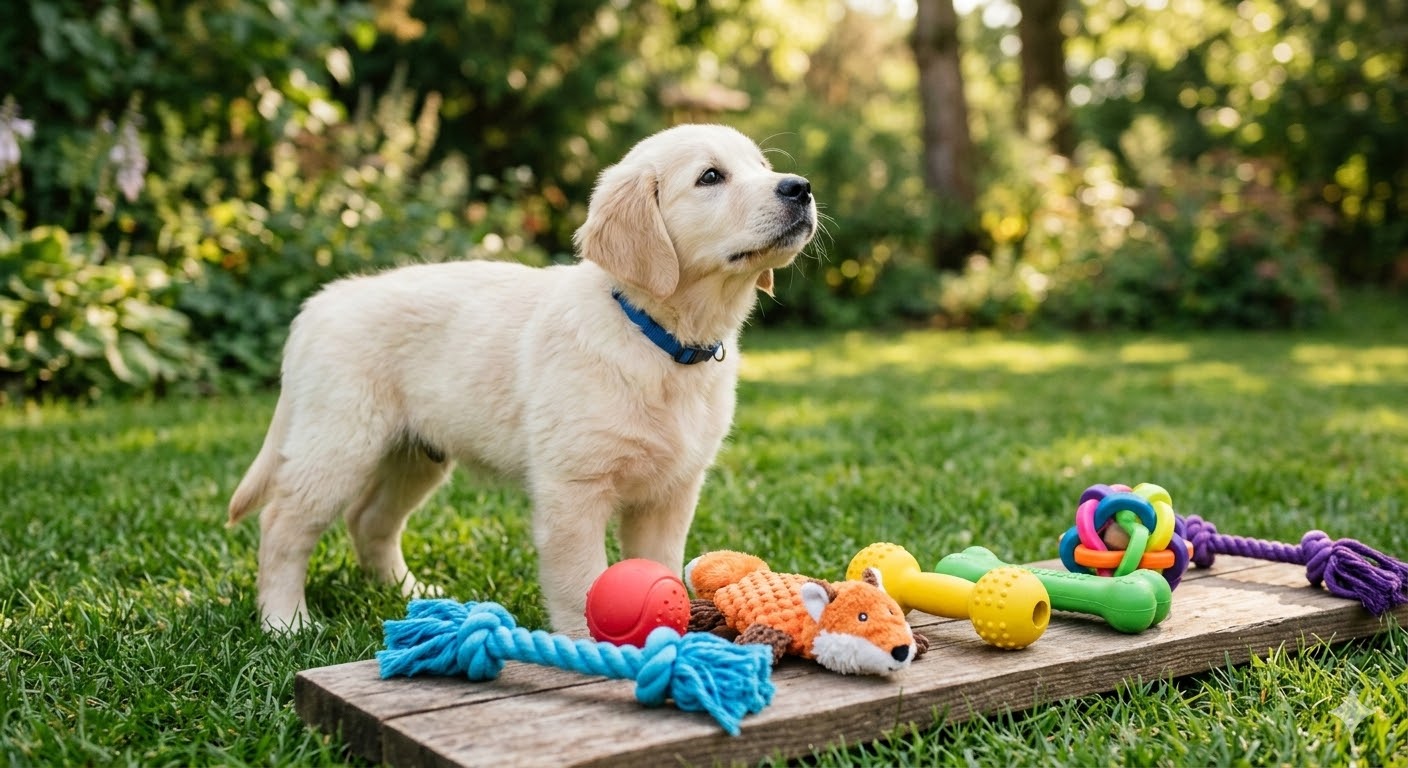
Imagine throwing a bright red toy onto green grass. To you, it stands out instantly. But to your dog, that same toy might almost blend into the ground, making it harder for them to recognize and stay interested in. On the other hand, blue or yellow pops much more clearly in their vision.
So when choosing toys, it’s not really picking the one that is aesthetically appealing to us, but rather the one that our dog can actually see, recognize, and enjoy playing with.
Why Color Choice Affects Playtime
Visibility – Spotting Toys Easily
Visibility directly affects how quickly you can locate a toy, especially during fetch or outdoor play. Colors that stand out clearly in a dog’s vision help them track movement better and react way faster.
For example, a blue or yellow ball on a green grass is easy to follow. Others might appear greyish, blending into the background. This would commonly cause the dogs to lose interest – not because they are bored, but because they simply can’t see the toy well enough.
If you’ve ever noticed your dog ignores certain toys outdoors, colors could be the hidden reason.
Engagement – Dogs Stay Interested Longer
When a toy is easy to see, dogs naturally stay more engaged with it. It also applies with us too, clear visuals keep the attention longer. Encouraging chasing, and increasing overall excitement during play.
This is why dog toy colors matter more than we often realize. Better visibility leads to faster reaction, stronger focus, and more satisfying play sessions. Over time this can even reduce frustration-based behavior that comes from low stimulation or confusing play signals.
In other words, choosing the right toys would not only just improve fun – it improves communication between you and your dog.
Training and Learning
Color also plays an important role in training. When dogs can clearly see a target, maker or object they learn command faster and respond more consistently.
That’s why many training tools and agility equipment are designed in blue and yellow tones. These colors stand out clearly in canine vision, helping dogs recognize cues without hesitation or confusion.
Whether you’re practicing fetch, recall, or basic obedience, using visually clear toys support better focus and smoother learning.
Best Colors for Dog Toys — Recommendations
Now that we have learned how dogs see color, the next question becomes very practical: What color toys should I get my dog? While there’s no single perfect color for every situation, some colors consistently perform better than others in some specific scenarios in terms of visibility, engagement, and ease play.
If your goal is to help your dog find, chase, and enjoy their toys more easily, these are the most reliable options.
Blue – The Most Visible
Blue is generally the easiest color for dogs to see, even in low light or busy environments. Because a dog’s color receptors are most sensitive in the blue range, blue toys tend to stand out clearly against most backgrounds – grass, floors, sand, or indoor surfaces.
That’s why blue balls, frisbee and chew toys are often easier for dogs to track during fetch and outdoor play. If you’re unsure where to start, blue is usually the safest and the most versatile choice for dogs when it comes to toys.
Yellow – Bright and Attention-Grabbing
Yellow is another color dogs perceive very clearly. It creates strong contrast, especially in darker environments or against green grass and soil.
During outdoor play, yellow toys usually “pop” more in dog vision, making them easier to locate as well and less likely to get lost. Many owners notice that dogs respond faster to yellow simply because they are easier to visually lock onto during movement.
If your dog enjoys fetching, running games, or park play, yellow would be an excellent option.
Purple and High-Contrast Combinations
Interestingly , purple often appears closer to blue in a dog’s vision, which means many purple toys are still fairly visible to them, even though not as clear as pure blue or yellow, it could still work in many environments.
Even better are high-contrast color combinations, such as:
- Blue + Yellow
- Blue + White
- Yellow + Black patterns
These combinations help toys stand out from the background and remain visible even when partially hidden or moving quickly. High contrast improves detection speed and keeps dogs engaged longer during play.
When choosing the best colors for dog toys, visibility should always come before aesthetics. A toy your dog can clearly see is obviously the one they would enjoy more, interact for longer, respond quicker during play and training.
Colors to Avoid (and Why)
When choosing toys, it’s just as helpful to know what color toys you should avoid for your dog, especially if visibility and engagement matter to you
Red
Often appear as grayish or brownish in a dog’s vision, which makes it blend easily into floors, dirt, or grass. Because of this low contrast, red is commonly considered to be the worst option when it comes to dog toys.
Green
Green is especially difficult for dogs to spot outdoors. On grass, green toys would most likely disappear visually making it frustrating and shortening playtime. If your dog is an outdoor play lover, green is a color worth avoiding.
Orange and Pink
Orange and pink tend to appear washed out or muted to dogs, sitting somewhere between gry and yellow in their vision. While not completely invisible, they don’t stand out strongly and are generally less effective than blue or yellow for active play.
Practical Tips for Choosing Dog Toy Colors
So, when people ask “what colors should I get for my dog?”
The best answer isn’t just one color for everyone. A few small practical details can make a difference in how much your dog actually enjoys their toys.
Think About Where You Play
Depending on their play style preferences, choosing the right toys colors could have a positive impact on your dogs.
For outdoor play (grass, dirt or sand) blue or yellow usually stand out the best. These colors create a strong contrast against natural backgrounds, making toys easier for your dogs to spot during fetch or running games.
For indoor play, it helps to think about your floor color. A blue toy stands out nicely on light floors, while yellow tends to pop more on darker surfaces. Matching toys color with preferred environment can quietly improve your playtime without you even noticing.
Texture and Sound Still matter
Color isn’t the only thing that keeps a dog interested. Texture, sound, and even smell play a huge role too. Some dogs love squeaky toys, some prefer soft chewing textures, and others enjoy toys that carry familiar scents.
Think of color as a visual bonus-not the only deciding factor when choosing the best color dog toys.
Every Dog Is a Little Different
Just like people, dogs have their own preferences. One dog might keep laying their eyes on the blue toys, while another seems obsessed with yellow. Even some prefer scent rather than colors to spend their time with. The best way to learn is to simply observe how your dog reacts to different colors during play. Over time, you will naturally discover what keeps your dog most engaged and happy.
FAQ-Common Questions
1. Do dogs prefer certain colors?
Not exactly in the way humans do. Dogs don’t “like” color emotionally, but they see some colors more clearly than others, so they often respond better to toys in these shades.
2. If my dog loves red toys, should I stop?
Not necessarily, as explained, each dog has their own preferences, color isn’t the only thing that attracts them. Sometimes stopping it could cause potential stress,..
3.Will dogs ignore toys if they are the “wrong” color?
Sometimes the toy may simply be harder to spot, especially outdoors. But dogs usually stay interested if the toy has an engaging texture, scent or squeaker.
Final Thought
If you are wondering what color toys I should get my dog, blue and yellow are usually the best choices because they are easier for dogs to see and track during play. Still, color is the only one factor-combining visibility with the right texture and sound will give your dog the best play experiences.

Written by John Nguyễn – co-founder of FIVIVE GLOBAL CO., LTD.
Hi, I’m John, co-founder of FIVIVE in Vietnam’s Central Highlands—where coffee wood is everywhere. We turn leftover branches from coffee trees into natural chews, keeping things simple, clean, and honest. At FIVIVE, we believe in giving your dog something real—nothing more, nothing less.